A Comprehensive Guide to Diesel Generator Fuel Consumption: Calculations, Charts, and Optimization
- Share
- Issue Time
- May 17,2026
Summary
Effectively managing diesel generator fuel consumption is key to controlling operational costs and ensuring reliability.
A Comprehensive Guide to Diesel Generator Fuel Consumption: Calculations, Charts, and Optimization
Effectively managing diesel generator fuel consumption is key to controlling operational costs and ensuring.
What You Will Learn
- Why is Monitoring Fuel Consumption So Crucial?
- Key Factors That Influence Fuel Consumption
- The Critical Relationship Between Load and Fuel Efficiency
- How to Calculate Diesel Generator Fuel Consumption
- Standard Fuel Consumption Chart (Approximate Gallons/Hour)
- The "Rule of Thumb" for Quick Estimations
- Practical Tips to Optimize and Reduce Fuel Consumption
- The Importance of Regular Maintenance for Fuel Economy
- Environmental and Operational Benefits of Fuel Efficiency
- Choosing the Right Generator Size to Maximize Efficiency
Understanding Diesel Generator Fuel Consumption: A Deep Dive
For any operation relying on diesel generators for primary or backup power, understanding fuel consumption is not just a matter of curiosity—it's a critical component of budgeting, operational planning, and logistical readiness. Knowing how much fuel your generator uses directly impacts your operating costs, refueling schedules, and overall efficiency. Whether for a construction site, a data center's backup system, or an off-grid facility, every gallon of diesel counts. This comprehensive guide will break down everything you need to know about diesel generator fuel consumption, from the technical factors that influence it to the practical steps you can take to optimize it.
Why is Monitoring Fuel Consumption So Crucial?
Accurate fuel consumption data is the foundation of effective power management. It allows you to create precise budgets, plan for fuel storage and delivery, and ensure your generator can run for the required duration during an outage or operational cycle. Inaccurate estimates can lead to unexpected costs, or worse, a generator shutting down prematurely due to a lack of fuel. For businesses, this means downtime, lost productivity, and potential revenue loss. Therefore, a firm grasp of your generator's fuel needs is essential for seamless and reliable operation.
Key Factors That Influence Fuel Consumption
The amount of fuel a generator consumes is not a fixed number; it is influenced by a variety of interconnected factors. Understanding these variables is the first step toward managing them effectively.
- Generator Size (kW/kVA): Larger generators naturally consume more fuel to produce more power. However, running a large generator on a small load is highly inefficient.
- Load Percentage: This is perhaps the most significant factor. Generators are most fuel-efficient when running at their optimal load range, typically between 70-80% of their rated capacity.
- Engine Age and Condition: Older or poorly maintained engines are less efficient and burn more fuel to produce the same amount of power.
- Engine Technology: Modern engines with advanced features like electronic control units (ECUs) offer better fuel combustion and efficiency compared to older mechanical designs.
- Ambient Conditions: Environmental factors like high ambient temperatures and high altitudes can reduce engine efficiency and increase fuel consumption, as the engine must work harder.
The Critical Relationship Between Load and Fuel Efficiency
It's a common misconception that if a generator runs at 50% load, it will use 50% of the fuel it would at 100% load. This is incorrect. Fuel consumption is not linear. Diesel generators achieve their peak efficiency when operating near their rated capacity, generally in the 70% to 80% range.
Operating a generator at a very low load (often below 30%) leads to a condition known as "wet stacking." This occurs when unburned fuel and carbon deposits build up in the exhaust system because the engine isn't hot enough for complete combustion. Wet stacking not only wastes significant amounts of fuel but can also cause long-term damage to the engine, leading to costly repairs.
How to Calculate Diesel Generator Fuel Consumption
While manufacturer spec sheets provide valuable data, you can also use formulas to estimate fuel consumption. A widely accepted rule of thumb is that a diesel generator will use approximately 0.4 liters of fuel for every kilowatt-hour (kWh) of electricity produced.
A more specific formula is:
Fuel Consumption (Liters/Hour) = Specific Fuel Consumption (g/kWh) x Power Output (kW) / Fuel Density
However, for most practical applications, using a fuel consumption chart is the easiest and most reliable method.
Standard Fuel Consumption Chart (Approximate Gallons/Hour)
These charts provide estimates based on generator size and operating load. Note that these are approximations, as real-world consumption can vary based on the factors mentioned earlier.
| Generator Size (kW) | 25% Load (gal/hr) | 50% Load (gal/hr) | 75% Load (gal/hr) | 100% Load (gal/hr) |
|---|---|---|---|---|
| 50 kW | 1.8 | 2.9 | 3.9 | 5.0 |
| 100 kW | 2.6 | 4.1 | 5.8 | 7.4 |
| 250 kW | 5.7 | 9.5 | 13.6 | 18.0 |
| 500 kW | 11.0 | 18.5 | 26.4 | 35.7 |
| 1000 kW | 21.6 | 36.4 | 52.1 | 71.1 |
Data is for estimation purposes only.
The "Rule of Thumb" for Quick Estimations
For a quick, on-the-fly calculation, a common rule of thumb is that a diesel generator consumes about 0.1 gallons of fuel per kWh at full load. For example, a 100 kW generator operating at full load would consume approximately 10 gallons per hour (100 kW * 0.1 gal/kWh). While not perfectly accurate, this provides a useful baseline for initial planning.
Practical Tips to Optimize and Reduce Fuel Consumption
Improving fuel efficiency saves money and reduces your environmental footprint. Here are actionable tips to get more out of every gallon:
- Right-Size Your Generator: Ensure the generator's capacity is correctly matched to your application's power needs. An oversized generator operating at a low load is one of the biggest sources of fuel waste.
- Optimize Load Management: Whenever possible, run the generator in the 70-80% load range. Consolidate power-intensive tasks to run simultaneously rather than spreading them out, which keeps the load low.
- Perform Regular Maintenance: A well-maintained generator runs more efficiently. Regularly replacing air, fuel, and oil filters, cleaning fuel injectors, and ensuring proper engine tuning are crucial for optimal performance.
- Use High-Quality Fuel: Clean, high-quality diesel fuel ensures complete and efficient combustion. Contaminated fuel can clog injectors and reduce engine performance, leading to higher consumption.
- Reduce Idle Time: Unnecessary idling with no or very low load consumes fuel with zero productive output. Implement smart controls to shut down the generator during periods of low demand.
The Importance of Regular Maintenance for Fuel Economy
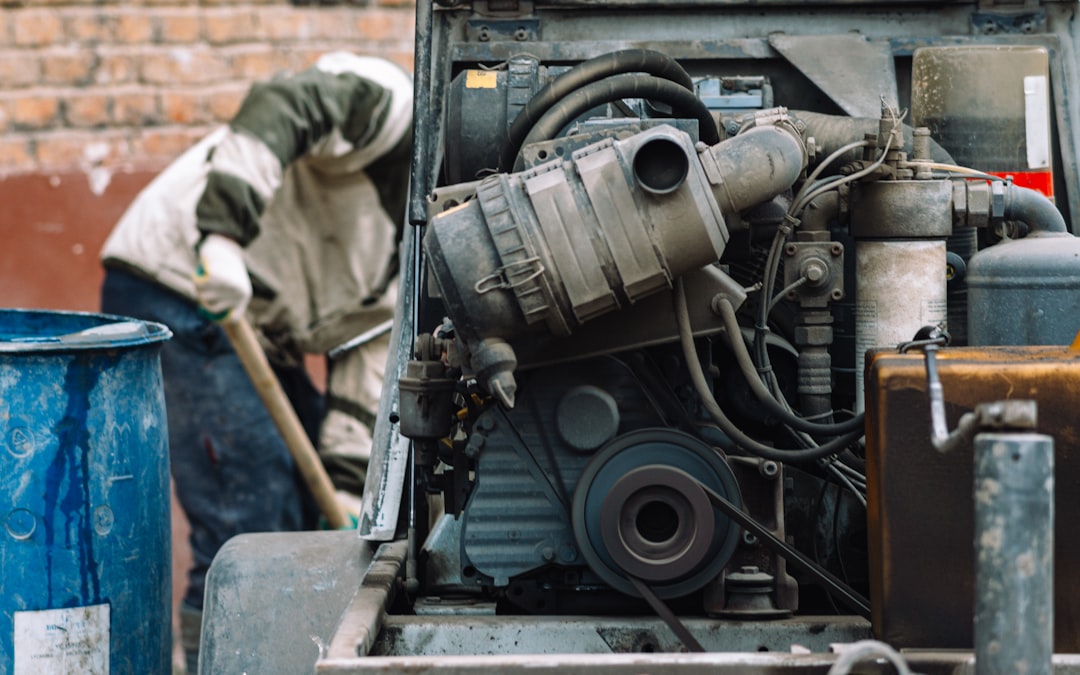
Regular maintenance is non-negotiable for fuel efficiency. A dirty air filter restricts airflow, forcing the engine to work harder and burn more fuel. Clogged fuel injectors lead to poor fuel atomization and incomplete combustion. Neglecting regular oil and filter changes can increase friction and wear, reducing overall engine efficiency. A scheduled maintenance plan, performed by qualified technicians, is a direct investment in your generator's fuel economy and longevity.
Environmental and Operational Benefits of Fuel Efficiency
Beyond the obvious cost savings, optimizing fuel consumption offers significant benefits. An efficient generator produces fewer emissions, including carbon dioxide (CO2) and nitrogen oxides (NOx), helping your operation meet environmental standards and reduce its carbon footprint. Operationally, an efficient and well-maintained generator is a more reliable generator. It is less prone to issues like wet stacking and premature component wear, ensuring it's ready to perform when you need it most.
Choosing the Right Generator Size to Maximize Efficiency
Choosing the right generator size is the most critical decision for ensuring fuel efficiency from day one. Conduct a thorough load analysis of your facility or site. Tally up the power requirements (both starting and running wattage) of all equipment the generator will support. Sizing a generator too large leads to chronic under-loading and inefficiency, while undersizing it causes excessive strain and risk of failure. Consulting with a power generation expert can help you analyze your load profile and select a generator that will operate in its most efficient range for the majority of its runtime.
Design Your Stable Emergency Power System — Contact NovArk Power
Get a free power system design consultation for your diesel generator set project. Our engineers will analyze your requirements and deliver a tailored generator solution.
This article is for informational purposes only. Specifications and availability may vary by region. Please contact NovArk Power for a confirmed quotation tailored to your project requirements.