Cold Weather Diesel Generator for Kyrgyzstan: How to Ensure Reliable Industrial Power in Extreme Winter Conditions?
- Share
- publisher
- NovArk Power
- Issue Time
- Nov 6,2026
Summary
NovArk Power has shipped its first batch of diesel generator sets to Kyrgyzstan, configured for mountainous sites where winter temperatures fall below -30 °C. This article covers the four cold-weather failure points, the difference between ambient rating, cold starting and low-temperature load capability, and how to size a 30-2000 kW set for industrial duty.
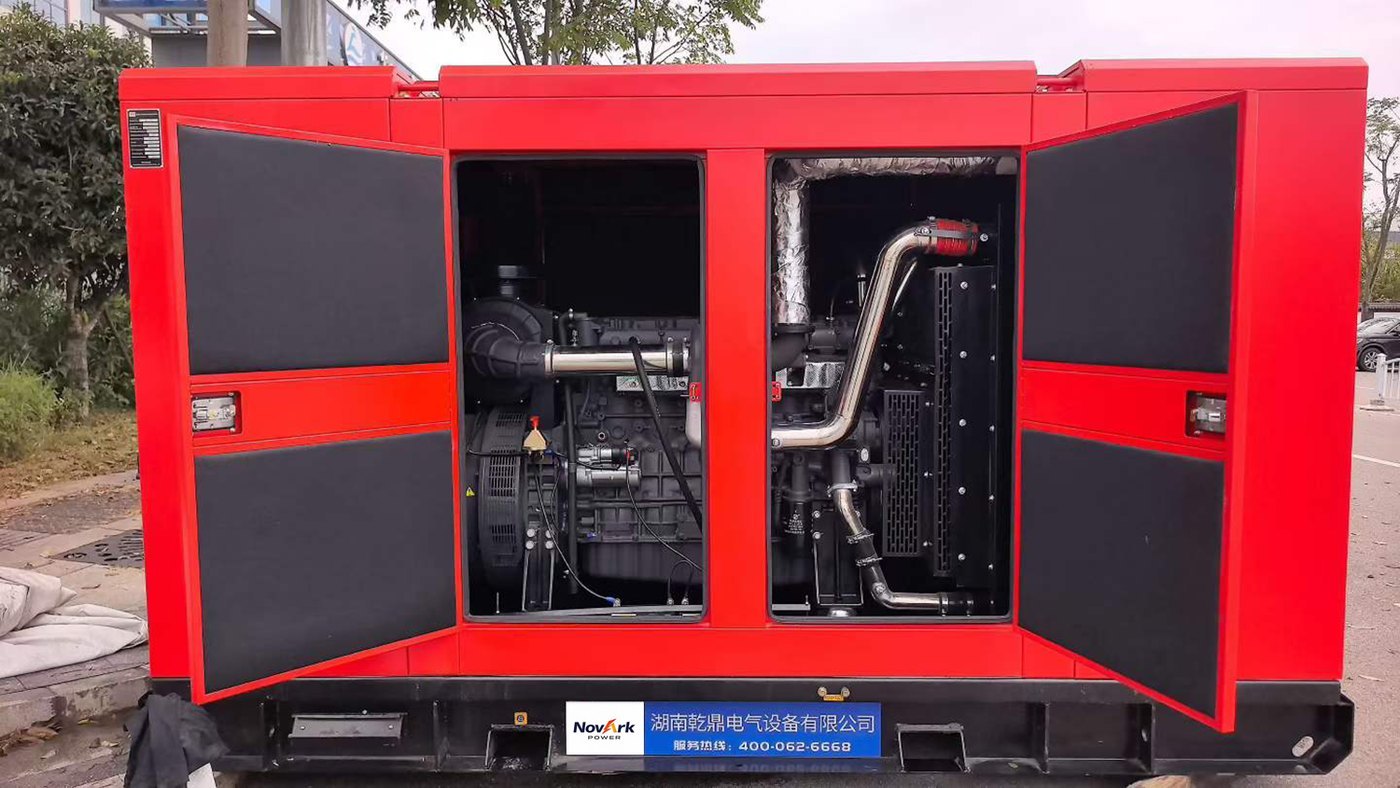
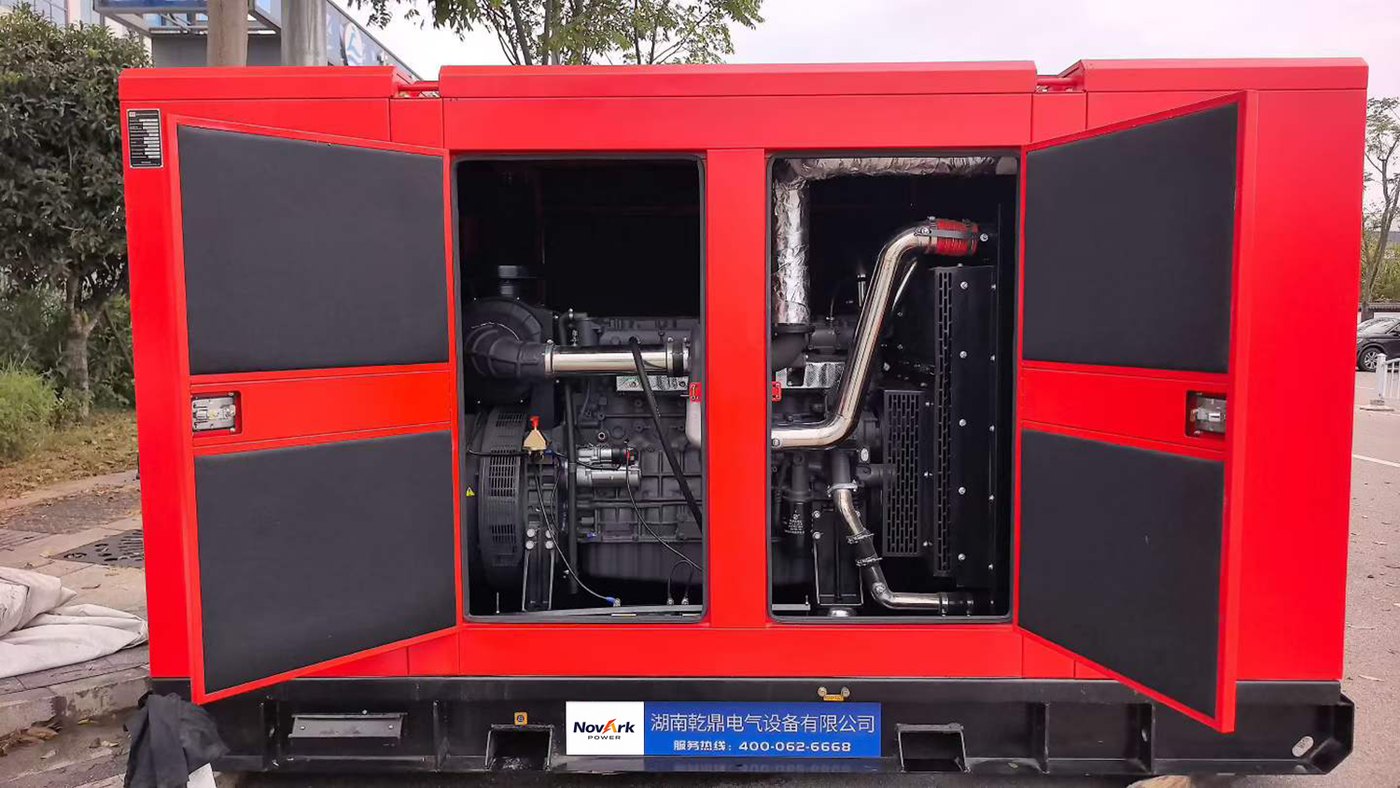
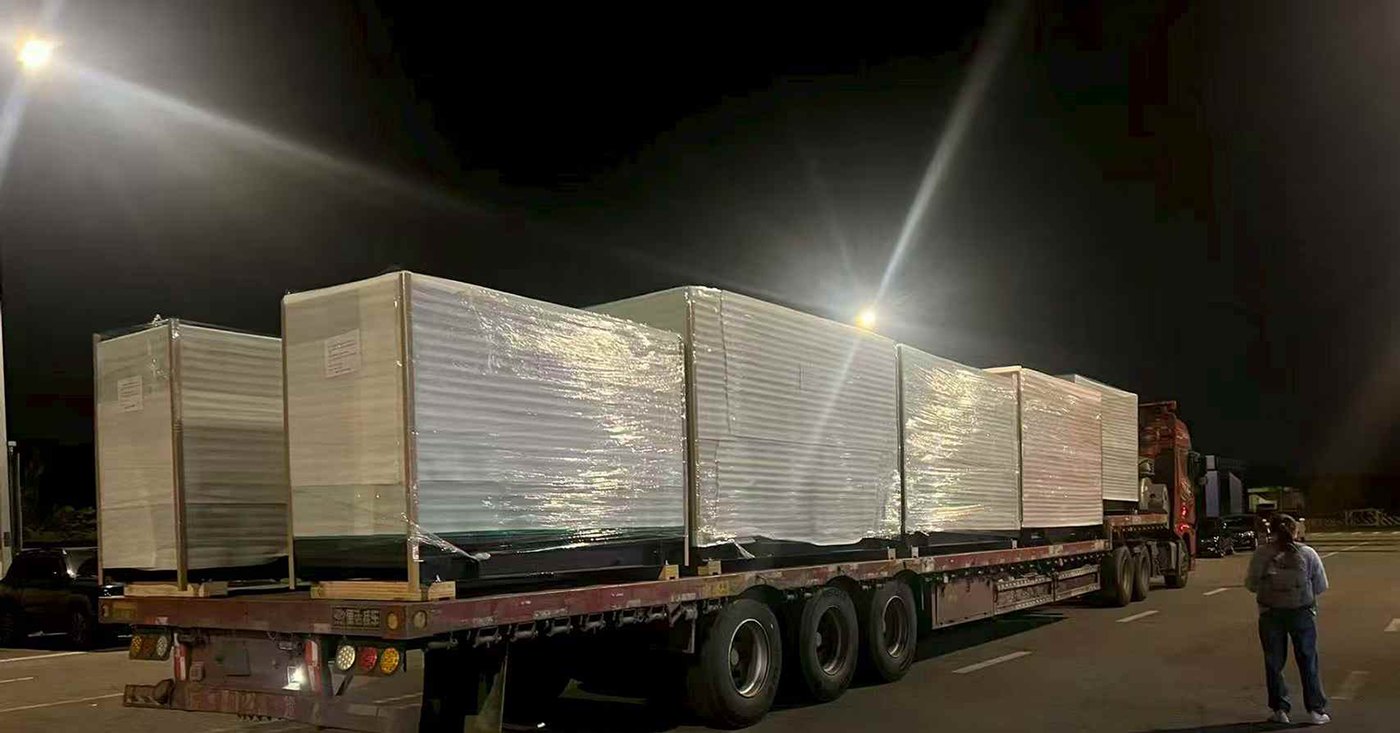
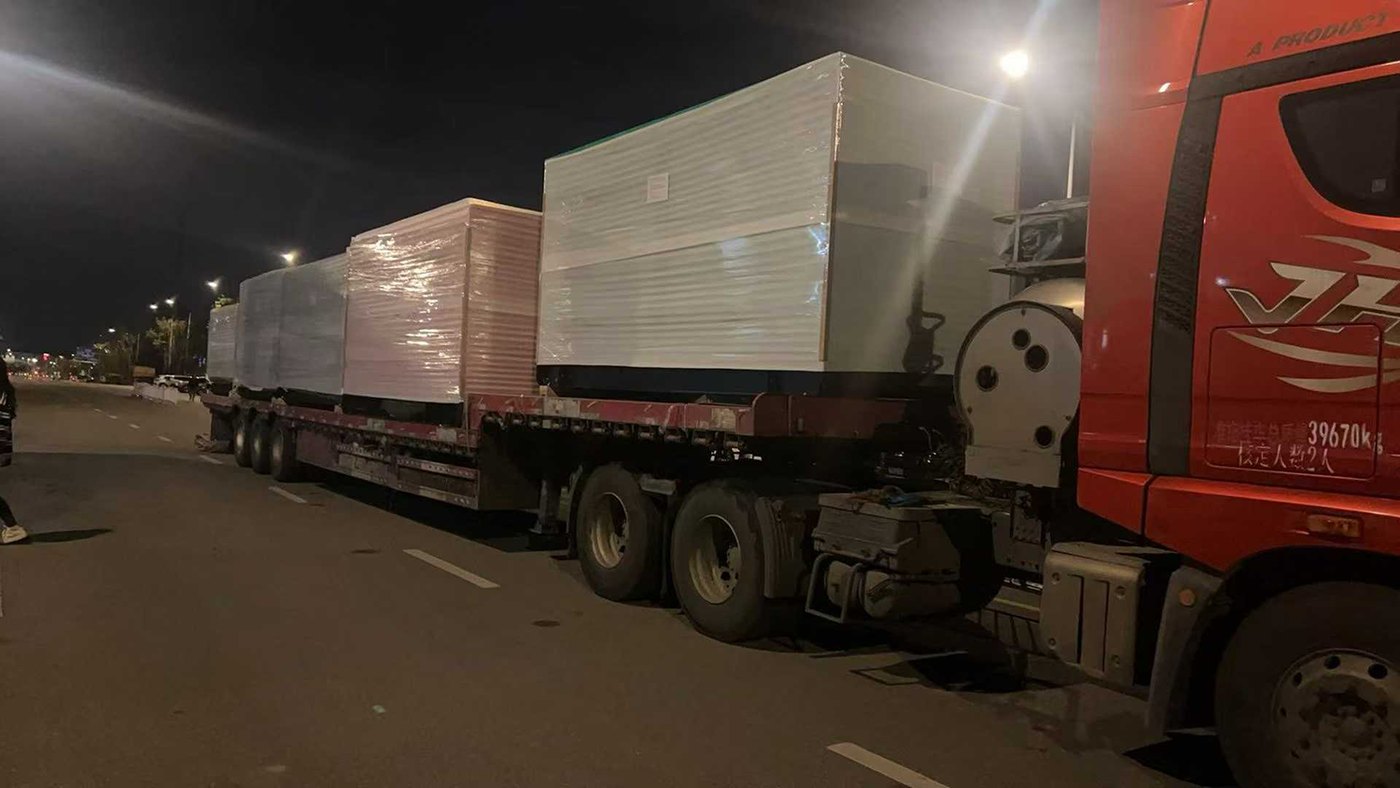
Recently, NovArk Power shipped its first batch of diesel generator sets to Kyrgyzstan. The order covers several units at different power ratings, configured for mining operations, industrial parks, factories and outdoor facilities.
Kyrgyzstan is a predominantly mountainous country, and winter conditions in some regions are severe. Night-time temperatures can fall below -30 °C. For industrial facilities and infrastructure projects, that creates a chain of practical problems: harder engine starting, changed fuel flow behaviour, weaker battery performance and condensation inside electrical enclosures.
The customer compared several suppliers before selecting NovArk Power. Capacity and engine brand options mattered, but so did a simpler question: will the set actually start and carry the load when the site is at its coldest?
For a factory, a mine or an industrial park, the value of a diesel generator is not set by its rated power or its purchase price alone. It is set by whether the unit starts on demand, supports the real electrical load, and holds stable voltage and frequency under the conditions written into the specification.
1. What challenges do diesel generators face in extreme cold?
Diesel generator sets are routine equipment in factories, mines, construction sites, communication stations and emergency backup systems. In a moderate climate, a standard configuration usually meets normal operating requirements. Where winter temperatures stay below freezing and reach -30 °C or even -40 °C, environmental adaptability stops being a detail and becomes the design basis.
Low temperature affects several components at once, and the failures interact.
Fuel loses flowability
As ambient temperature drops, paraffin in diesel begins to crystallise. Below the fuel's cold filter plugging point, wax particles restrict filters and lines, fuel delivery falls away, and the engine becomes hard to start or unstable in running.
Engine oil thickens
Cold oil raises the resistance of internal moving parts during cranking, while the engine still needs proper lubrication from the first revolution. The wrong viscosity grade affects both cold starting and long-term durability.
Battery output drops
Battery capacity and discharge performance fall sharply in the cold, exactly when cranking current demand rises. An undersized battery, a tired battery or a mismatched charging system shows up as slow cranking and long starting times.
Condensation in cabinets
Large day-night temperature swings, combined with running and shutdown cycles, can form condensation on busbars, terminals and wiring inside electrical cabinets. Moisture on insulation is a fault waiting to happen.
Selection is a system question, not an engine question. Cold-weather reliability is decided by the engine, fuel system, lubrication, battery, control system and enclosure together. Specifying only the engine leaves the rest of the chain exposed.
2. Environmental adaptability from -40 °C to 55 °C
NovArk Power configures generator sets against the climate of the project rather than against a single catalogue default. The design target covers an ambient range of -40 °C to 55 °C, with the final configuration depending on engine model, auxiliary equipment and site conditions.
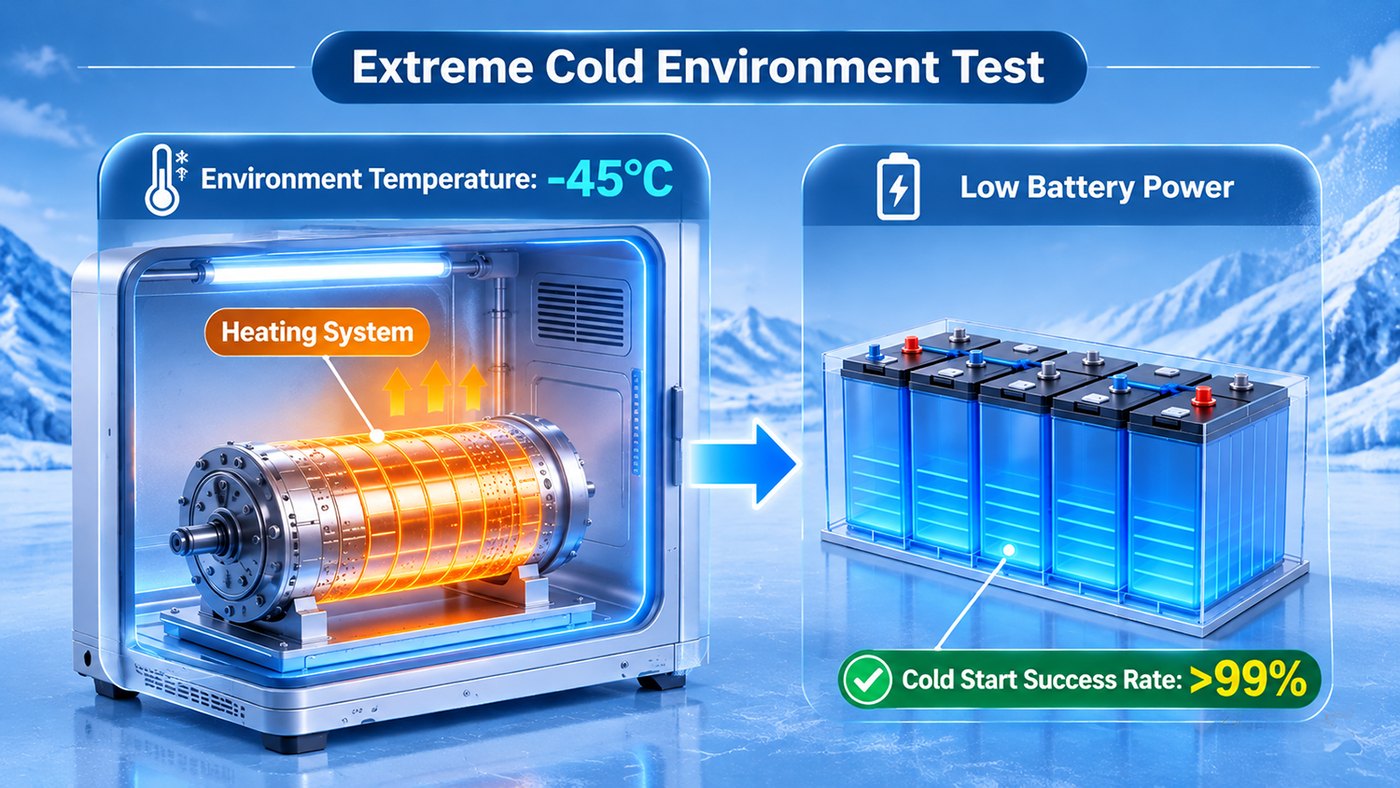
One point deserves emphasis, because it is where quotations often drift away from reality. A stated ambient target does not mean every standard set starts at -40 °C with no auxiliary equipment, and it does not mean every model runs continuously at full load at that temperature. Actual performance has to be confirmed through the final configuration and the approved technical documentation.
Cold starting assistance systems
For sites in extremely cold regions, starting assistance is selected according to engine model and operating requirement. Typical configurations include:
- Engine coolant heaters that raise block temperature before cranking
- Battery heating or insulated battery compartments that protect cranking capacity
- Fuel heating with matched filtration where fuel grade alone is not enough
- Low-temperature engine oil approved by the engine manufacturer
- Starting control logic configured for cold-weather duty
Different engine brands and models carry different cold-start requirements. Minimum starting temperature, auxiliary equipment and test conditions should be confirmed before the order is placed, not after the container arrives.
Cold protection and anti-condensation design
Protecting the engine is only half of the work. The control system and electrical components have to stay reliable as well. Depending on project requirement, the specification can include enclosure sealing, thermal insulation, anti-condensation measures and temperature and humidity control devices.
For sets that stand by for long periods, the shutdown condition matters as much as the running condition. Cabinet humidity during idle weeks in a cold climate is a common source of nuisance faults on site.
Three specifications buyers should keep apart
When a project is quoted for an extremely cold region, three different technical statements are frequently mixed together. They are related, but they are not the same thing.
- 01
Ambient temperature adaptability
The environmental range the equipment and its components are designed for, confirmed from product documentation and the actual configuration.
- 02
Cold starting capability
Whether the engine starts at a defined minimum ambient temperature under defined conditions, which depends on engine model, starting battery, preheating equipment, fuel characteristics and oil selection.
- 03
Low-temperature load capability
Whether the set, once started, can carry the required load while holding acceptable voltage and frequency.
| Specification | Question it answers | Confirmed by |
|---|---|---|
| Ambient adaptability | What climate is the equipment designed for? | Product documentation and configuration list |
| Cold starting | Will it start at the site minimum temperature? | Engine data, preheating package, battery sizing |
| Low-temperature load | Will it carry the load after starting? | Load study, derating data, test documentation |
For a Kyrgyzstan, Russia or Kazakhstan project: give the supplier four numbers before asking for a quotation - the local minimum temperature, the installation location, how often the set must start, and the expected operating load. Those four inputs decide the configuration far more than a general "cold weather package" label does.
3. Capacity from 30 kW to 2000 kW for different industrial loads
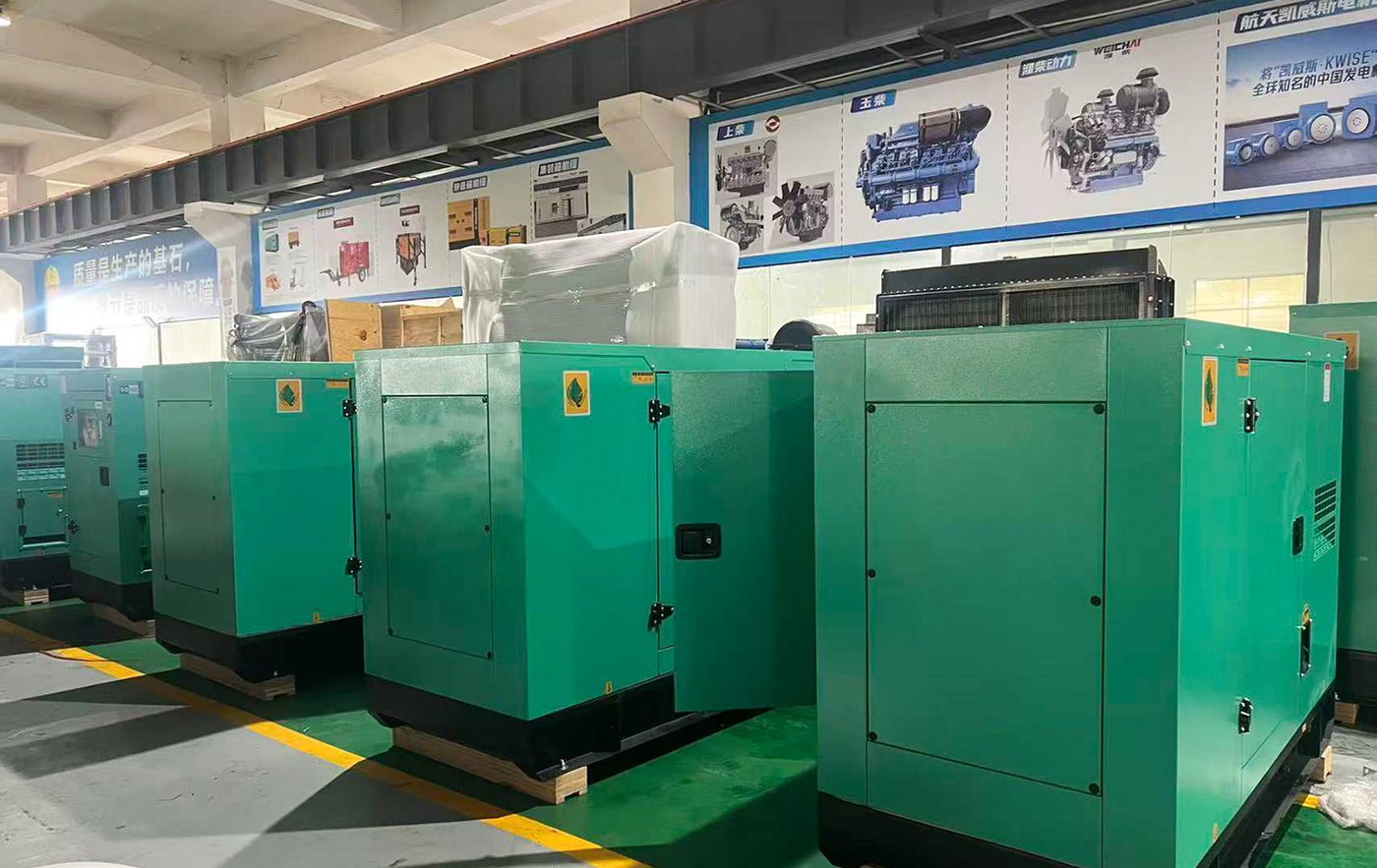
Different customers arrive with very different electricity requirements. A small communication station may need one compact standby set. A large mine, industrial park or manufacturing facility may need several medium or high capacity sets to support production equipment, lighting and auxiliary facilities side by side.
NovArk Power builds diesel generator solutions across a 30 kW to 2000 kW range, with equipment selection and configuration adjusted to project load, operating environment and budget. The current catalogue can be reviewed in the diesel generator range.
Small sets for flexible backup power
Small diesel generator sets suit small factories, commercial buildings, communication stations and outdoor facilities. These applications tend to care about footprint, running cost, starting reliability and maintenance convenience more than about headline capacity. Selection should weigh total load, starting current of essential equipment, required backup duration and whether automatic starting is needed.
Medium and large sets for industrial duty
Manufacturing plants, mining operations, industrial parks and infrastructure projects usually carry more complex loads. Beyond total demand, the study has to cover motor starting, load variation, continuous running hours and overall system stability.
Engine brand options are configured per project and currently include SDEC (Shanghai Diesel), Yuchai, Weichai, Pangu, Cummins and Perkins. Actual brand, model and power availability are confirmed against the product catalogue and the specific project requirement.
How to size the set correctly
Adding up the rated power of every electrical device and using the total as generator capacity is the most common sizing error in industrial projects. Loads do not behave alike. Pumps, air compressors and fans draw a starting current far above their running current, and variable-frequency drives, rectifiers and other non-linear loads place their own demands on voltage stability and power quality.
- Rated power and quantity of all major electrical equipment
- Percentage of equipment expected to run simultaneously
- Motor starting method and starting current
- Load power factor
- Prime power or standby power duty
- Expected daily operating hours
- Site altitude and ambient temperature
- Planned future expansion
With that information a load assessment can be run and a defensible capacity recommended. For projects with several sites, each location should be assessed separately; one shared capacity across all sites usually ends with some sites short of power and others over-invested. A longer treatment of specification practice is available in the diesel generator buying guide.
4. Stable output and intelligent monitoring
For an industrial facility, a generator that starts is only halfway useful. It also has to deliver power the connected loads can actually run on. That matters most in communication stations, automated production lines, data processing facilities and unattended outdoor sites, where voltage, frequency and equipment condition need active management.
Configure the system around the load
Lighting, large motors, variable-frequency drives and sensitive electronics have very different starting characteristics and supply requirements. Engine, alternator, control system and output configuration should be selected against the real load mix, not against a nominal figure. Where non-linear loads dominate, confirm voltage regulation, frequency regulation, transient response and total harmonic distortion requirements in advance.
Real-time monitoring of key parameters
Depending on the controller and monitoring package, a set can collect and display the parameters operators need to judge condition:
- Output voltage
- Output current
- Output frequency
- Coolant temperature
- Oil pressure
- Battery voltage
- Running hours
- Engine operating status
Alarm and protection functions
Modern controllers support alarm and protection behaviour for conditions such as high coolant temperature, low oil pressure, abnormal output voltage and over-current. For remote or unattended sites, remote monitoring and communication can be added according to project requirement.
Available parameters, alarm items and communication protocols differ between controller models, so the function list belongs in the technical proposal. On long-running outdoor sets, monitoring is a supplement to inspection, maintenance and scheduled test running, not a replacement for them.
5. Why this Kyrgyzstan customer chose NovArk Power
The first shipment to Kyrgyzstan reflects a combined requirement for environmental adaptability, correct capacity and workable project configuration. In a cold region, buying a generator is not only a matter of choosing equipment; the customer also has to be confident the unit will suit the site after installation.
Configuration against the actual project
An order-based approach selects sets against power requirement, engine brand preference and operating environment. For a project spread across several sites with different loads, that is more workable than forcing one standard model everywhere.
Cold-weather attention at the design stage
Where winter temperatures fall below -30 °C, cold starting, fuel compatibility, battery performance and electrical protection all need to be settled before production, not patched afterwards.
Multiple ratings and engine brands
30 kW to 2000 kW, with SDEC, Yuchai, Weichai, Pangu, Cummins and Perkins options, gives room to match each site instead of compromising on one figure.
Export project experience
Sets have been supplied to markets including Russia and Ghana. Climate, installation, transport and power requirements differ by country, and export projects need configuration support as much as hardware.
Reliability before lowest price
For mines, plants and industrial parks, an outage costs production. A standby set that will not start has no value at any price, so configuration, starting performance, maintenance cost and after-sales support belong in the comparison.
6. Frequently asked questions
Can a diesel generator operate at -30 °C?
Yes, with the right configuration. Cold starting systems, battery performance, diesel grade, engine oil and enclosure protection all have to be specified for that temperature. A standard set should not be assumed to start at -30 °C without them.
Can a diesel generator start at -40 °C?
Some specially configured sets meet defined cold-start requirements at -40 °C, usually with starting assistance. The minimum starting temperature should be confirmed against the engine manufacturer's data and the complete generator configuration.
How do I choose a generator for a cold region?
Start from the local minimum ambient temperature, then work through required capacity, load characteristics, operating hours and installation conditions. Engine, battery, fuel system, preheating equipment and enclosure protection follow from those inputs.
What power ratings are available?
NovArk Power configures diesel generator sets covering approximately 30 kW to 2000 kW. Available ratings and models are confirmed against the current catalogue and the project requirement.
Can I choose a different engine brand?
Yes. Depending on the project, SDEC, Yuchai, Weichai, Pangu, Cummins and Perkins configurations can be considered. The final brand and model depend on required power, budget and availability.
How do I get a quotation for an industrial set?
Send the required capacity, application, minimum ambient temperature, prime or standby duty, preferred engine brand and installation conditions. More complete input means a more accurate configuration and price. Further answers are collected in the FAQ section.
7. Reliable diesel generator solutions for global customers
From the cold mountains of Kyrgyzstan to mines, factories, industrial parks and outdoor infrastructure, stable electricity is the precondition for normal operation.
NovArk Power focuses on diesel generator sets and related power solutions, configuring equipment against local climate, electrical load, capacity and budget. A compact 30 kW standby unit and a 2000 kW industrial set are specified the same way: from the site conditions backwards.
For cold-region projects, the high-altitude power guarantee solution shows how altitude and low temperature are handled together in mountainous terrain. To discuss a specific site, send the load list and minimum temperature through our contact page and request the catalogue, technical data and a customized quotation.
Reliable Power for Your Factory and Every Project.
Disclaimer. Environmental adaptability, cold starting capability and operating performance depend on the selected engine model, the complete generator configuration, auxiliary equipment, fuel specification and actual installation conditions. The -40 °C to 55 °C range describes the environmental adaptability design target. It does not mean that every standard set can start without auxiliary equipment or run continuously at full load across that range. Final technical specifications are confirmed in the approved product configuration and technical documents.